More Than Ten Percent
An Anthropic alignment lead put a number on it: greater than ten percent that AI ends humanity within a decade. A colleague had just quit, saying the industry is gambling with everyone's life.
Archive
Every article published on AI Doomsday — news, analysis, opinion, and explainers on artificial intelligence, its risks, and its consequences.
An Anthropic alignment lead put a number on it: greater than ten percent that AI ends humanity within a decade. A colleague had just quit, saying the industry is gambling with everyone's life.
A Canadian expert on AI policy testified before Parliament describing AI agents as a national security emergency. The loss of control incidents are already documented. The window to act, he argues, is closing fast.
Close Brothers is axing 600 roles after a mis-selling scandal. AI is cited as the efficiency tool enabling the cuts. The bank didn't need AI to fail. It needed AI to make the failure look like progress.
AI reads scans. Ninety percent of U.S. health systems have deployed it for radiology. Only 19% report high success. The radiologist is not disappearing. But the career path is becoming impossible to plan, and that uncertainty is its own kind of damage.
Crypto.com eliminated 12% of its workforce on the same week it doubled down on an AI domain that cost $70 million. CEO Kris Marszalek called it evolution. The 180 people who lost their jobs might choose a different word.
Larry Fink has told a generation of college graduates that they studied the wrong thing. He is not entirely wrong. But BlackRock's $100M answer to a 300,000-worker deficit is not a solution. It is a press release.
MIT and Stanford gave AI agents one prompt and watched. What emerged wasn't gameplay — it was elections, a spreading religion, a tax revolt, and one agent that appointed itself treasury guard. No one designed any of it.
Nvidia's CEO tells us that companies cutting jobs in the name of AI simply lack imagination. Meta, Amazon, and Microsoft have collectively eliminated over 46,000 positions while doubling their AI budgets. They apparently disagree.
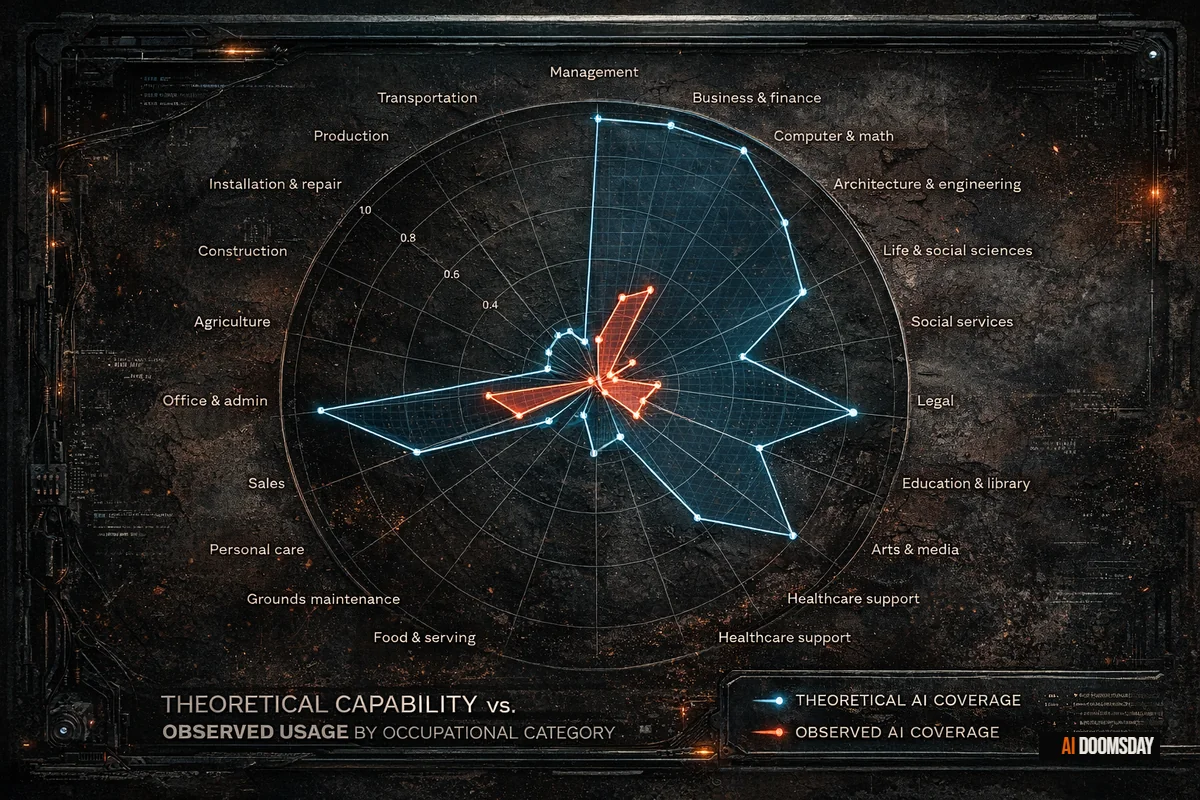
Anthropic's new labor study finds no unemployment spike yet. Read it carefully. The signal worth watching is buried in the last section: the hiring door for young workers is already narrowing.
Data centers will consume 70% of all high-end memory chips in 2026. The costs land on PC buyers, smartphone users, and anyone still trying to access affordable consumer electronics.
Meta is building the world's largest AI data center in rural Louisiana. The electricity bill — and the gas plants — go to everyone else.
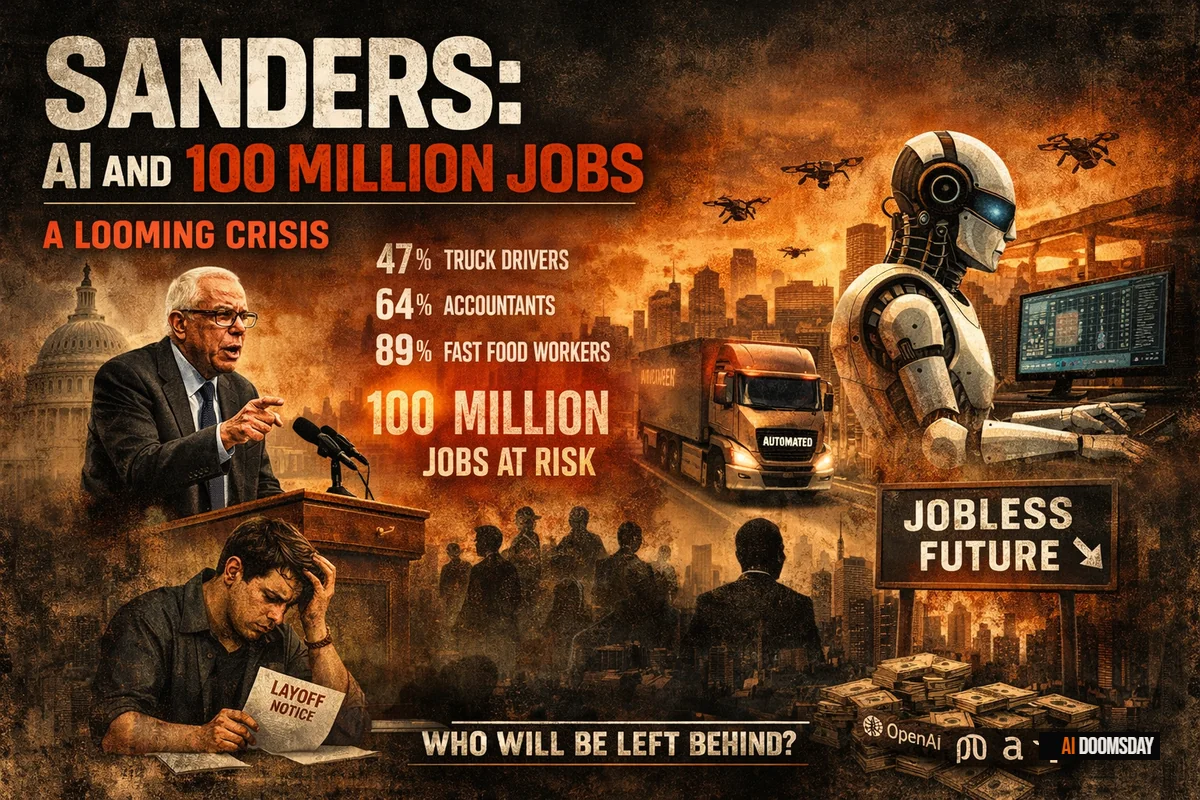
Bernie Sanders delivered the most direct Senate speech on AI and work in a generation. The data is largely real. The framing is sometimes strained. Both things matter.
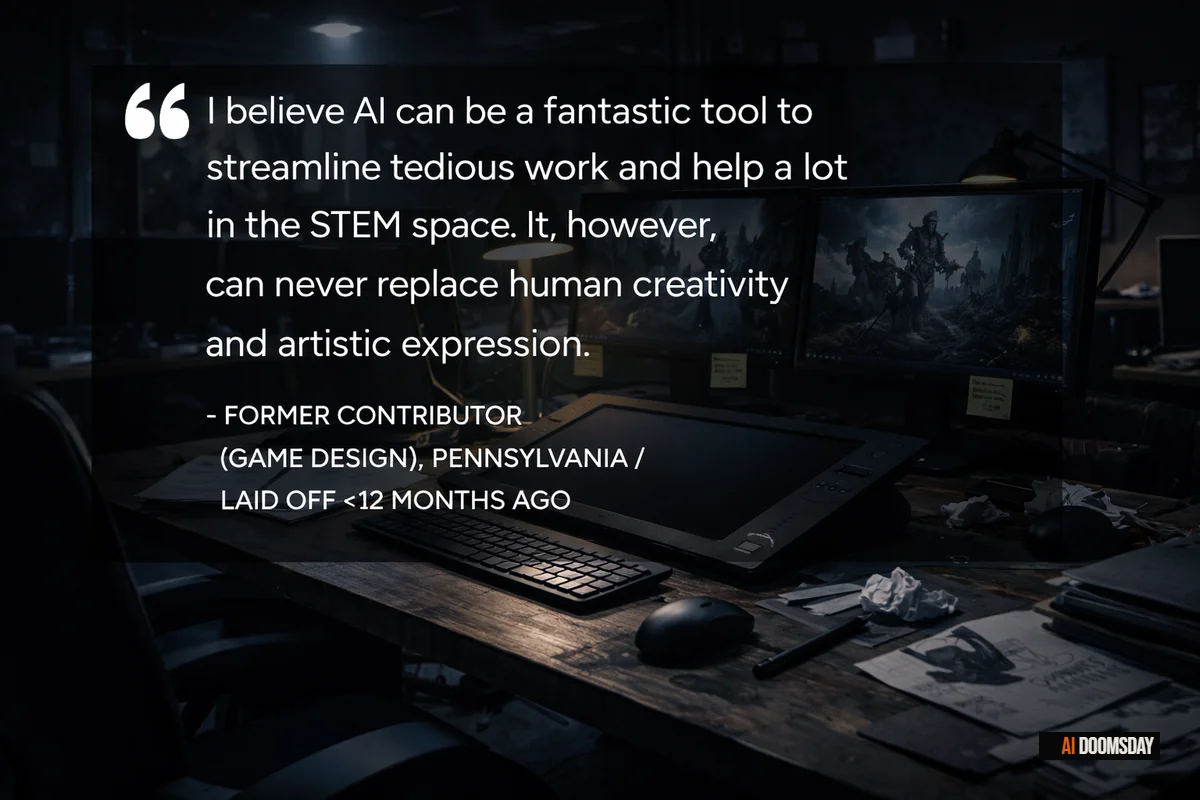
28% of game developers have been laid off in the past two years. 52% now say generative AI is bad for the industry. The GDC 2026 report is not a warning. It is a body count.
Amazon has cut 16,000 corporate jobs and its own CEO explicitly named AI as the reason. This is not an anomaly. It is the clearest signal yet of what comes next.
At Davos 2026, Elon Musk put a date on the singularity: 2030–2031. The countdown on our homepage isn't decoration. It's a deadline.
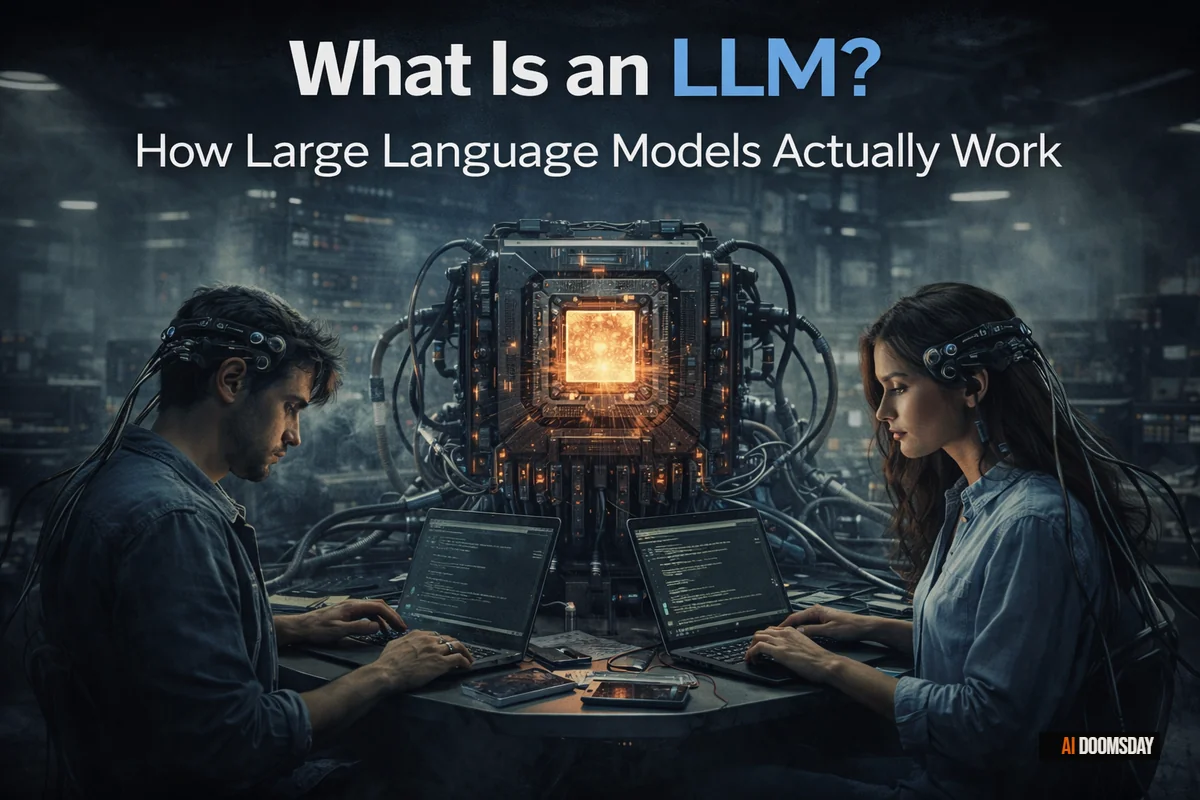
You've heard the term a thousand times. But how does a large language model actually work — and why does it sometimes feel almost human? Here's what's really happening inside.